


I recently passed this milestone – alcohol-free – and it turned out not to be too fraught with temptation. In truth, I haven’t drunk much for a few years so it wasn’t that big a leap. But reflecting on the experience does bring insights – and as we all live, directly and indirectly, with all sorts of pressures, unhelpful habits and ‘addictions’, I thought I’d share those insights with you here…
The first question most people ask is, “why?” Well, context changes – so why shouldn’t our habits and behaviours change too?
Some earlier life stages for me included: As a teenager, and discovering ‘independence’ as I left home for University, drinking seemed to be ‘cool’, demonstrating adulthood perhaps, especially as I was a bit shy and introverted. I think I over-compensated for that.
When at University, and then establishing myself as an adult at work, I easily fell in with the social expectations in the pubs and clubs – a need for belonging with the group and a way to meet and make new friends.
After sporting exertions (cricket, squash), ales were a just reward!
And as I grew older, beers and wine became a habit – it’s just what we do when we meet friends or socialise.
It wasn’t long before wine became the ‘medication of choice’ to deal with stress and exhaustion after long, challenging days at work, and juggling the responsibilities of family life.
Perhaps you recognise some of these stages.
So, what prompted a change?
Primarily it was awareness of the example I was setting to my children; and also, my health and weight; and as a bonus, extra cash (I’d moved on from regular salary to running my own business).
These three reasons are still true as I become teetotal.
And what am I noticing so far (in fact it’s now 50 days…)?
- It’s not a big deal. Alcohol is over-rated! Beyond the first few sniffs, sips or slurps of expectation and engagement, it’s just more of the same. In fact, I could go so far to say that all that ‘pleasure’ is a mental construct, learned about during that earlier context of wanting to fit in and be adult, and influenced by effective marketing. Does a baby like wine?;
- No hangovers (even small);
- More reading – I’m making some progress with that leaning tower of books by my bed;
- You can still have fun and interesting conversations with friends – and remember a lot more about them;
- Alcohol is endemic in our society and culture – prizes, rewards, fun, happiness – are all associated, for eg ‘gin oclock’, fundraising raffle prizes, tennis club prizes, birthday cards…. And everywhere there are assumptions that everyone buys into this social norm. That’s the thing I have noticed most of all.
And the damage caused is also endemic
- Various physical health issues – liver, weight /heart, cancer;
- Mental health, addiction & depression;
- Aggression;
- Broken relationships;
- Bad decisions;
- Poverty.
You know all of that already. I’m not here to prozelitise about the need for abstinence, or judge anyone or any business – a few drinks with friends is often fun and rewarding and a ‘passport’ in society. This choice is just what works for me, now. If it helps anyone to know that, then that’s OK!
And my experience is giving me more perspective on how out of balance expectations seem to have become, systemically, but also how. I hope that, before long, people won’t need to ask ‘why?’ when someone chooses to be alcohol-free.
Cheers!
Adrian
Brilliant individuals are not necessarily good leaders – but they can be
As a coach, I have worked with many smart and confident senior executives, law partners, finance sector ‘high flyers’ and others. I’ve admired their brains, ability and hard work, and I’ve also seen how they can falter when challenged with stepping out of their ‘comfort zone’ as successful experts into more senior leadership roles. Here, they have to influence a much broader range of colleagues than their immediate team, to work with them through the relentlessness of change.
This is something that can be developed – even if it is at times uncomfortable!
What are the capabilities and qualities which can help them shift and thrive in this more strategic and ambiguous leadership role?
In a nutshell, I believe leaders need to have capability in 3 key areas:
- Developing vision and strategy
- The ability to implement and execute plans, and build capability in the organisation
- And inter-personal skills – communicating with their team and other stakeholders
And qualities which both inspire confidence from the front and motivate through human connection. These represent a ‘way of being’ – the ‘how’ rather than the ‘what’ – a shift in attitude, thinking and beliefs that, when experienced by others, create emotional connection and thereby real intrinsic motivation. They start with:
- Clarity of purpose (linked with the vision and strategy)
- Robustness, calm resilience and credibility (including appearance)
- Comfort with change (not for the sake of it, but as appropriate to achieve objectives in changing circumstances)
- Positivity and drive (energy)
- Presence & attention
These first five are all factors that help executives to lead people, especially those who like to be led from the front. Additional qualities are also needed to motivate a broader range of colleagues at a more intrinsic level.
- Honesty and authenticity (a basis for trust and an active move away from ‘politics’)
- Belief in common purpose
- The ability to accept and learn from challenging feedback
- Systemic empathy (being able to connect with the broader ‘zeitgeist’ as opposed to empathising with each individual)
- Agile responsiveness and comfort with ambiguity
You can see that these centre around providing a more human connection to build trust, and inevitably include some humility and a little vulnerability. I find this can be especially challenging for a successful results-driven executive or ‘subject matter expert’ with a long track record of direct action, delivery focus and brilliant performance, and a fear of getting anything wrong. Which is why the confidentiality and support of the coaching relationship is just as important as the challenge and action focus.
There is a delicate boundary between the confidence and congruence of really effective leadership and the arrogance of imposed authority. It is the ability to find that edge and operate on the right side of it that attracts followers. It isn’t simple reasoning or hierarchy that creates trust and persuades people to invest their time and effort to meet demanding objectives – it also requires an emotional buy-in as well.
Not all executives turn acquired positions of authority into effective leadership, and not all executives sense or feel able to accept an invitation to give leadership when it is needed. But the ability to lead is something that can be developed.
Your knee bone connected to your…
I took myself by surprise in 2013. Having never run more than a couple of miles in the previous 52 years, I entered and completed my first half-marathon.
So what did I learn and discover from this great feat – and what does that tell me about the challenges of working life?
1. I could do it! And it didn’t matter that I had to walk the last 6 miles or that I was nearly last;
2. My feet, achilles tendons, knees, thighs, ‘glutes’, lower back and upwards are all indubitably connected in one remarkable (but slightly misaligned) system;
3. I needed help – physiotherapy, pilates and a podiatrist to help deal with the troublesome aforementioned limbs, an ever-supportive wife, and dozens of generous friends and relatives who encouraged and generously sponsored me. *
I have also been busy working this year! In my work with leaders and their teams, I like to be an ‘agent of change’ or a catalyst for better performance so, in that spirit, I find myself asking ‘what difference do these points above make in the broader context of our lives and work?’

outperform your expectations
1. So many of us, so often, treat tasks and challenges as ‘binary’ or ‘black and white’ – so don’t attempt them through fear of failure. In truth, there is usually an infinite number of outcomes, so why not put the quest for perfection aside and just get on with it. You might just surprise yourself.
2. Nothing in life happens in isolation – we are all individuals and we are all connected, and everything we do has an effect on others. Remember this as you hurtle forward through life and work’s challenges – who else will notice that effect? And what would you like them to notice?
3. Good teamwork means that you can outperform your individual expectations (one of the central tenets from the study of high performing teams).
I’m not sure I’ll rush to run another long race – I’m listening to the message from my joints – but I do wonder what alternative challenge might happen over the next year. I’ll wager that it will include imperfection, and that I won’t be doing it on my own!
Which just leaves me to thank you for being one of my valued ‘connections’ and to wish you a very happy Christmas holiday season and a positively surprising year ahead.
60 years ago today, ‘Nature’ Magazine published James Watson & Francis Crick’s description of the ‘double helix’ structure of DNA – an amazing moment for science and mankind. Their work was an important step in the journey towards so much that is important to us today in healthcare, cancer research and many other fields. Jacob Bronowski’s reference to Watson & Crick’s work in his impassioned ‘Ascent of Man’ series ultimately inspired me to go on and study biochemistry at University.
Who could have guessed in 1953 what seems so ‘normal’ now? Huge progress has been made in many areas of science and technology: nuclear physics, neuroscience, communications, the internet and iPads to name a few! And what other extraordinary achievements will we see in our lifetimes? Prepare to be amazed again.
But while science and technology hurtle forward, one thing which, arguably, doesn’t change much is the human condition: our need for fulfilment, meaning, motivation, identity, connection – and how that is manifested in family, relationships, creativity, careers, society and leadership. In the end I wasn’t much of a biochemist and my work now focuses on people – and how they can achieve their best results in their lives and within their human conditions.
In my work as an executive coach people often ask what coaching brings. For me, it’s about providing support for the client’s ‘ascent’ – whatever that might mean for them. Perhaps it’s how a lawyer can connect with and manage their team; or how an asset manager can cut through ‘all the noise’ with clarity; how an accountant can develop the self-confidence to become a leader; or how a multi-national team can build trust and focus together; how a marketing director can build engagement and commitment for promotion; or how an entrepreneur can believe in themself as, well, an entrepreneur! All of these results could have been true in 1953 too.
The answers for dealing with the doubt, anxiety, confusion or isolation that gets in the way come from within their own human condition. And the methods for revealing those answers are grounded in thinking from Watson & Crick’s time (Carl Rogers’s person-centred approach) and much earlier (Socrates!), combined with a clear focus on the outcome they want – and the ‘space’ to think and share confidentially.
I’ll leave you with Bronowski’s final words from his series (yes, I still have the book!) which, for me, captures both the excitement of the future and, also, why my work is important to me:
“We are all afraid – for our confidence, for the future, for the world. That is the nature of the human imagination. Yet every man, every civilisation, has gone forward because of its engagement with what it has set itself to do. The personal commitment of a man to his skill, the intellectual commitment and the emotional commitment working together as one, has made the Ascent of Man.”
Thank you for your time and attention. If you’d like to share this message with others, please do. And I’m running the Devizes Half-Marathon this year for Cancer Research UK (science!) and Mind, the mental health charity (the human condition!). Do please take a look and support if you can: justgiving.com/teams/adriangoodall
Unfinished Business (and season’s greetings!)
It’s around 200AD. Picture the exhausted Mayan calendar-maker’s apprentice: hands, fingers and concentration exhausted from chipping away at hard rock, while the winter solstice party season is fast approaching.
As she applies the finishing touches to the latest section of the great calendar, she glances across to the red sunset, catches the unmistakeable aromas of roast armadillo, guacamole and mulled tequila, and murmers:
“Enough! The next b’ha’tun* is just going to have to wait until next week – surely 1800-odd haab’* into the future is OK for now! Who’s going to be around then anyway?!”
Little does she know that the whole calendar-making department is going to be made redundant (and ritually sacrificed) immediately after the solstice celebrations due to the ongoing Mayan government cost-cutting exercise. Nor that, in December 2012, some folk might interpret this interrupted ‘end’ of the calendar as signalling the end of days!
And so to today. As we hurry around ticking off our ‘things to do’ before the Xmas holiday, there’s bound to be plenty of unfinished business left over for the New Year.

a warm and merry Xmas to you
The world isn’t going to end on Friday, so we can prepare for a holiday – I hope yours is merry and warm in the company of your loved ones.
And we can plan ahead too. As life carries on into 2013, what would you like to have happen? How will you choose to be, and to what do you need to pay attention to help make that happen?
Humanity has plenty of unfinished business – let’s all play our part in making the next b’ha’tun a good one!

unfinished business for humanity
With very best wishes and thanks for your friendship, collaboration, business, time and support over the last year,
Adrian
* B’ha’tun = c.394 years Haab’ = 1 year (source Wikipedia)
When you’ve lost your job and are looking for a way forward
As job cuts continue to hit the financial and professional services sector* with the worsening eurozone storm, here are some thoughts about what you can do, and how you can be if you lose your job (or know someone who has).

"times are tough - really tough - this time around"
Option 1 (which you’ve probably heard a few times by now!): Keep Calm, (put it in perspective) and Carry On. You can sort this out. It’s happened to many before you – the vast majority have been just fine – and for some it will have been a ‘blessing in disguise’ as they move onto a new role. That could be you too. Obviously you’ll be dusting off your CV, looking at your network of contacts and headhunters, keeping in touch with news and ideas in your sector and being ‘open for business’ by 8.30am. You didn’t need me to tell you all that, did you? And it’s always best to think about your future from a frame of mind which is as calm, confident and as resilient as you can make it. You’ll make clearer decisions and communicate them better.
The problem is, times are tough – really tough – this time around, especially if you’re used to a gilded life in the City. New jobs are very scarce. So for some, Option 1 just won’t cut the mustard – it’s not at all obvious how to ‘carry on’. And rather than being calm and resilient, you could be experiencing a cold fog of doubt, humiliation, anger, a visceral fear gnawing at your confidence, paralysing your usual ability to get things sorted. Your very identity, long defined by your work, your seniority, your power, is under threat. What, where, and who, are you now?
Option 2 is a more ‘strategic’ reassessment: Stop. Observe. Witness. Notice what is happening and what’s different about you and the circumstances you find yourself in. In a fog, any information is valuable. Recognise that this could be a moment of significant change – and it’s up to you what decisions you make about that change. Resilience is about generating ideas and options and lining up your strengths and resources to support yourself as you test them out.
So, reflect upon what’s ‘hurting’ – and what’s not! Where it’s not (maybe a big relief!), that’s a clue that you didn’t care that much, you were bored or the previous role was more of a burden than a pleasure. How much energy, effort or stress has it been costing you to live with that up until now? Are you prepared to take that on again?
Where the job loss is hurting, consider if it’s:
- the job that’s just disappeared (redundancy – hardly your fault); or
- was it that your best capabilities weren’t really matched up to the role?; or
- maybe you know that this time you’ve messed up. Perhaps you’re blaming yourself – that’s only going to help you if you now choose to look at things differently. “I’ve learnt from that. What can I do differently from here?”
Once you’ve checked out what’s happened and where you are right now, then there are many techniques for developing clarity and confidence about the message you want to give to the world about what happens next. Only when you’re clear about what you really want will you be able to demonstrate the commitment and desire that any prospective employer wants to see.

"exercising some unfamiliar ‘muscles’ – values, beliefs, purpose..."
These approaches may involve using some unfamiliar ‘muscles’ – values, beliefs, purpose, finding different perspectives – ‘fluffy stuff’, as your master-of-the-universe alter-ego might have scoffed. Except that this can be very challenging, unfluffy and ultimately very rewarding and exciting work. Just as physical activity can re-energise you, so exercising and changing the complex web of entrenched thoughts, assumptions and behavioural patterns which together make up your experience of the world can release powerful mental and emotional energies.
You can try these on your own or you may feel this is not the time to ‘walk alone’. You can work with trusted friends – or invest in support in the form of a professional coach or counsellor who can facilitate your exploration, challenge you and hold you to task in confidence. It can make a big difference to have the right kind of support for this sort of change-work.
Here are three approaches for starters:
Matching up your energy and your capability
- List the capabilities and strengths that you have demonstrated so far in your life – what might you give yourself an A for? (you can use post-it notes and the kitchen table!)
- List what you’ve really enjoyed doing, ie the things that just thinking about them gives you a ‘lift’. (Different coloured post-its?)
- List areas or things where others have said you’ve made a real impact.
How do these lists match up? What are the patterns you can see around where your energy, focus and skills will have their best effect? (And where your energy may have been wasted in the past?)
Testing out what a future role could feel like
Perhaps you have some sense of the kind of role you would like to have next. If so, and you’re in a place where you feel comfortable to do some ‘exploring’, then try this:
- point (with your finger) to the direction which feels right for the future;
- move (physically) in that direction and stop when you reach a point that represents a year from now;
- and, in that space, imagine that the job is yours, it’s happened, it’s true! What do you notice about what’s happening for you there – your sense of energy, self-belief, commitment – or not? What might other people who are important to you notice about you there? Does that give you any clues about how good that future is for you?
What support do you need? Make a plan!
If that does seem like a good future to be in, and you could be at or close to your best there, then what might you compare that to – it’s like… what? (It could be anything, whatever makes sense to you – no-one else needs to know!). Think about that for a minute or two.
- And for that future to be like that, you need to be like… what? Again, explore the qualities of that.
- And for you to be like that, what support do you need, from others, and from yourself? Make a short list.
- What’s the first step you can take now, towards that future? (Does anything else need to happen first before you do that?) And what’s the second thing you can do? And the third?

"a plan that’s realistic, but also so you can register a sense of progress over the coming days"
Start developing a plan that’s realistic, but also so you can register a sense of progress over the coming days. And as you take those steps, treat yourself to the odd glass of Chablis (or a refreshing run around the park) and remind yourself of those ‘A’s and how you and your life can be in a year’s time, now you’re back on track.
And if at first you don’t succeed, don’t give up!
Walk on, walk on, with hope in your heart,
and you’ll never walk alone.
For more on how coaching can work please take a look through this website or get in touch for a chat. You could even combine coaching with a restorative country walk: See your world more clearly. For the cost of a decent new suit or a fortnight’s family shopping at Waitrose, you could start to make some significant shifts in your thinking.
* Number of City jobs average for 2012 estimated to be 255,000 compared with peak of 354,000 in 2007
[gallery]
Reward and Motivation in a ‘Post-Bonus’ world

Tactical cuts so far - a new strategy is needed
To date, it hasn’t been the public opprobrium or even the political pressure that has resulted in sharp cuts to bonuses in the City. It’s economic necessity – reducing the cost base to stay profitable, rebuild equity capital and deal with continuing tough trading conditions and regulatory demands. These are tactical cost-cutting measures so far, but the economic factors driving them aren’t going to change in a hurry. The game has changed and the votes of angry shareholders are starting to count – we may now be in a ‘post-bonus culture’ and a new reward strategy for attracting, retaining, engaging and motivating the talented people needed for the future is required.
When it was just left-wingers, ‘occupiers’, righteous politicians and the odd blogger (see link below) kicking up a fuss, the hubris of the City institutions and other business executives responsible for awarding themselves such prizes seemed undimmed. But now we’re in an environment where everyone is having to take their austerity medicine, and some are gagging on that and hitting back. This is causing increasing political instability across Europe and the rise of extreme or protest voting. Our politicians are sensitive to this. The medicine will still have to be taken but greed will also be hunted down. To repeat, a new reward strategy is required.

Greece, Italy, Spain.. France, The Netherlands..?
John Plender (Financial Times, 21st April), says that investment banking is now “a mature industry that … pays entrepreneurial rewards for erratic and mediocre performance”. The paper also reports, for example, that Goldman Sachs’s Q1 results show revenues and profits very similar to Q1 2006 (Lex, 18th April), highlighting that maturity, despite all the brilliance and hard work of its people (and their huge rewards). How long might its own investment arm tolerate a company which showed no growth over six years whilst rewarding its people like kings? The FT also reports on Citigroup’s shareholder rebellion on their CEO Vikram Pandit’s pay package, and the pressure also being put on Barclays to keep its payments to Bob Diamond in check – we await the outcome of today’s AGM with bated breath.

Executive pay at Himalayan heights
The chorus is growing. Most recently Andrew Haldane, a member of the Bank of England’s Financial Policy Committee, said: “while bank performance has fallen off a cliff, executive pay remains close to pre-crisis Himalayan heights”, urging reconsideration of the way bankers are paid. And Henry Mintzberg, the renowned academic and thought leader on management and strategy, was quoted recently (The Globe and Mail, September 2011) as saying: “I defy anybody to measure the effect of a single individual, or few individuals, on the overall financial performance of a company”, adding that “we are seized by this sense of greed and narcissism”, and that “companies are communities”. Now here’s a clue for a different strategy.
It has been well researched and documented over the years (Maslow, Herzberg, McClelland and others, most recently Daniel Pink) that the underlying powerful motivating factors for people are the ‘intangibles’ of: the working environment (including behavioural culture); learning and development; a sense of progress, purpose, opportunity and achievement along with trust, recognition and responsibility. Successful communities and organisations like Google, Amazon, Accenture and Goldman Sachs (as I experienced it in the late ‘90s) offer these factors. Cash has been shown to be a surprisingly poor motivator beyond the short term, over and above what’s ‘necessary’ and/or what’s relative. Which is why if your chosen strategy to motivate people is with ever larger amounts of cash, you’ll always be worried that they’ll move to the competitors as soon as the music stops.
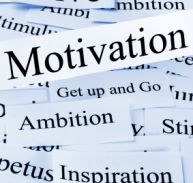
Most motivating factors are not financial
And this perhaps explains the apparent resistance to change which has been evident since the tectonic shift of 2008. Following Kegan and Lahey’s ‘Immunity to Change’ model, such resistance doesn’t necessarily reflect outright opposition, but could rather represent blockage from competing commitments – in this case the fear of losing their primary resource and potential source of differentiation, ie talented people in the organisation. So, in order to bring about significant and sustainable change to the whole system, there needs to be leadership from specific organisations to change the orthodoxy and burst the ‘fear factor’ bubble. For example, F&C last week spoke out about ‘high levels of compensation which are not sustainable’ – and others will surely follow suit as they realise they are now quite definitely in a ‘buyers market’ for talent.
Reward strategies always need to fit well with organisational strategy and desired culture and can be a powerful tool to drive change in behaviour and values to reflect a different operating environment, and differentiate the business from its competition. Total reward (according to Armstrong and Brown) includes both remuneration – pay, bonus, pension – and also the intangible benefits identified above.
Which City firms will be the bold leaders in looking to motivate their human resources more imaginatively, creating a different kind of business community to match the new environment? The old masters, or a new generation?
Links:
Andrew Haldane as reported in the Telegraph
Henry Mintzberg in The Globe and Mail
Lloyd Blankfein answers the critics
Wiki on Frederick Herzberg’s Motivation and Hygeine factor theory and McClelland’s Need theory
RSAnimate take on Daniel Pink’s Drive
And a blog from three years ago
A terrible economic recession (depression?) seems inevitable over the next few years as Western economies crumble under the burden of unsustainable debt, and the rest of the world catches the cold of falling trade and GDP.
The emperor’s clothes of ever-increasing ‘leverage’ over recent decades will be seen for what they are: an illusion of riches and consumerism, inflated asset values and personal and government spending powers utterly divorced from intrinsic wealth.

In other words, the biggest bubble ever. There’s nothing we as individuals can do about all of that: ‘austerity’ will be with us perhaps for many years.
But we will prevail. There is everything we can do about ourselves, our choices and how we connect with the abundance of human creativity, hope and love.
Currency, borrowing and GDP may be seen as the arbitrary constructs of a system that works most of the time to provide structure and mechanism for an organised society to function: enabling trade, sufficiency and employment.

But as they temporarily fail us, what we may rediscover underneath is a more durable and fundamental aspect of humanity and community.
Consider for a moment: there is so much we can be thankful for if we pay more attention – family, community and friendship, memories, creativity and innovation, discourse and enlightenment, organisational achievement, the limitlessness of the Universe and, most powerful of all, love. And most of us are lucky enough to live in safety, peace and a good environment.

We could choose to focus on the economic gloom and erosion of material wealth – and yes, there are people suffering in this world.
And we can also choose to focus our attention on the relationships which don’t need cash to make life meaningful and happy.
With thanks for your friendship and very best wishes for a happy and loving Christmas holiday and a New Year full of choices.
Adrian
Good leaders and teams in any context are focused on their objectives and satisfaction usually flows from achieving results which meet or beat those targets. That’s even more true, and more difficult, when operating in a tough economic and business context, as many of us are in now.
So there’s a challenge in keeping freshness in effort and motivation for executives and staff alike when markets are zero growth, more competitive than ever and short on bonuses. Words like ‘focus’, ‘actions’, ‘execution’, efficiency’, ‘toughness’ and ‘perseverance’ are all part of the lexicon for times like this. Such directive language plays an important role in crossing the arid lands between oases of success and reward.
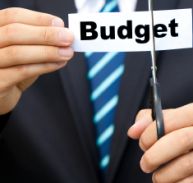
When there’s more acute focus on the bottom line, there’s a temptation to cut back on what might seem not to be immediate priorities. For some, this includes time and budget for so-called ‘soft skills’.
But what are ‘soft skills’? The very name sounds nebulous. Usually they include communication skills and behaviours, how to connect with others (and yourself), being comfortable enough to step back and pause to gain broader perspective before acting an communicating appropriately. Emotional intelligence if you like. But it’s not always ’emotional’ – and these skills are highly relevant and pragmatic in influencing and leading – with immediate impact.

In fact, the metaphor for such skills as being ‘soft’ seems entirely wrong. The language and behaviours involved, difficult to define perhaps, are like water – soft in some ways, but also essential, dynamic and equally capable of being hard, powerful and even destructive. Can you remember doing a belly-flop into a swimming pool? What do you think has worn down dramatic cliffs along our coastline?
The skills of communicating, influencing and connecting with other people are the very font of effective management and leadership, of client relationships, of clear objective setting and operational process. The ability to hold confidence and manage state is critical for both authority and personal performance.

It would be an parched environment indeed to work in without these skills, with limited flow of information, no spring of innovation. No wonder people can feel like a fish out of water.
So when those targets are tough to achieve, look to balance the directive vocabulary and also build leadership, better managers, networks, team focus, sales and motivation with smarter language, behaviours and relationships. The effect is immediate as well as providing a wellspring for sustainable growth.
Come on in, the water’s lovely!
Thanks for reading this. If you’d like to find out more about how we can help irrigate your leadership and management skills, do please take a look at our website.
Last week I enjoyed an excellent lunch with an old school friend. We hadn’t met in over 30 years and it was amazing how quickly and easily we were able to share memories, journeys and hopes. The previous week I’d met up with another group of old business colleagues at a reunion dinner and a similar thing happened. How good it is to reconnect with old friends.
And it got me thinking about what’s happening there – we’re not just connecting with those people but also with something of ourselves, from many years ago. There’s a risk that this can take you back to a ‘memory lane’ you’d rather not go down, but mostly it is a welcome reminder and reintegration of the experiences and resources which have got you to where you are now – and which can help to move you further forward.

We’re also reconnecting with places and environments – the context of your life and work may now be different but there’s a constancy in your ‘mental maps’ from those older places. The juxtaposition can allow new perspectives and nuances of understanding around today’s world to emerge – great for problem solving.
Sometimes we can put ourselves in a new space to help us reconnect with our courage and passion – if some of that’s gone missing and we need it to take on new challenges. That space can be virtual, created for example in a coaching relationship, or a physical change of scenery, or a retreat (like the award-winning Witherden’s Hall).
Reconnection isn’t always comfortable. There’s a balance between the fear of discomfort and the risk of not connecting – what opportunities might be lost – business, knowledge, friendship? Will you sidestep the challenge?

And what determines success? Rather than disappointing with ‘premature expectation’, perhaps we can let what wants to happen, happen. And be prepared to take any opportunities which arise.
Can we put a value on all that’s possible through reconnection? Not really. But I do know that being accepted by others – being worthy of connection – is such a core human need, that it’s hugely powerful, and priceless. And that works both ways.
Go on. Reconnect. You might find resourceful parts of yourself, new ideas from old places, courage, self-worth and opportunities. All pretty useful, whatever business or other challenges you’re taking on.